Thursday, January 25, 2007

WASM - World Association of Sleep Medicine


Advancing sleep medicine worldwide.

WASM 2nd International Congress
Bangkok Thailand 3 - 8 February 2007

Submission of abstracts is encouraged - these can be made online at http://www.wasm2007.info

FIRST WASM e-Newsletter now available !

To find out about sleep medicine in the rest of the world, click here.


Wednesday, January 24, 2007

Proud Napper or Napaphobic - - Which one are you?

"First of all, we need to be vigilant about nappist vocabulary, often used non-too-subtly by napaphobics. Proud nappers must inhibit people from using such phrases as stealing a nap, sneaking a nap, going down for a nap, and caught napping. Nappers have naps. They don't take, steal, or sneak naps. Nappers don't go down for a nap, they prepare for a nap. Nappers are never caught napping, because there is no crime to catch. Nappers are merely seen napping."------By Prof. William Anthony, author of "The Art of Napping" and "The Art of Napping at Work."

Great American Sleep Challenge Gearing Up!


Does having more energy, feeling refreshed and zipping through the day with a rejuvenated spirit sound intriguing or, maybe even impossible? It could be easier to achieve than you think.
One solution may be to get a better night’s sleep! An astonishing 70 million Americans experience sleep problems that impact relationships, health, productivity at work and even driving skills. In order to combat this growing epidemic, the National Sleep Foundation (NSF) will launch the NSF Great American Sleep Challenge TM, a nationwide, online interactive campaign designed to focus America’s attention on getting better sleep.

Beginning February 5 through March 31, 2007, Americans who want to achieve better sleep and improve their overall well-being are encouraged to log on to http://www.sleepfoundation.org/challenge/and sign up. It is easy to participate; all of the tools, which include a questionnaire to set desired sleep goals and a one week, online sleep journal, are presented in consumer-friendly language. Once they have completed their Sleep Challenge, participants will have the ability to assess their sleep needs and be one step closer to feeling refreshed, rejuvenated and ready to go. And, by participating in the Sleep Challenge, all entrants qualify to win “dreamy” sleep-related prizes.

Monday, January 22, 2007

The School of Sleep Medicine Alumni


Do you recognize yourself or anyone in this photo? What a great shot! This group is The School of Sleep Medicine (SSM) February 2003 Alumni. The school is nestled in right next to the Stanford University Campus in Palo Alto, California.
The first woman on the left in the front row here is Sharon Keenan, SSM Founder and Director, to her left, William C. Dement, and fifth and sixth from the left are Joyce Black and Andrea Patterson. I was delighted to find this and many other great photos of some of my favorite "sleep friends" on SSM's Alumni page. This one's going in my scrapbook!


Here's Some History

In 1979, Sharon Keenan joined William C. Dement's internationally recognized team at the Stanford University Sleep Disorders Clinic and Research Center. The Stanford team was instrumental in the accumulation of basic science and clinical sleep research, which ignited a rapid rise in awareness of sleep disorders. National and international scholars frequented Stanford to learn from Dement and his colleagues, including such notable figures as Christian Guilleminault, Merrill Mitler, Vincent Zarcone, and Laughton Miles.

It became evident that courses had to be organized in order to manage the increasing demand for information regarding the diagnosis and treatment of sleep disorders. By 1982, Mary Carskadon, Dement, and Keenan had begun organizing courses for physicians and technologists. Their work culminated in the creation of The Stanford University Sleep Disorders Center Training and Education Program, with Keenan as Director.

Keenan was responsible for managing the training for technologists and fellows within the sleep center, as well as organizing a series of two-week courses each year. Keenan remained Director until the university closed the program in 1989. At that time, it was practically the lone source of systematic education in sleep medicine. Dement, Guilleminault, and the late German Nino-Murcia encouraged Keenan to keep the program alive.

In 1989, she established an independent program dedicated to education in sleep medicine and clinical polysomnography. Roy Smith, who had also worked with Dement's team, provided invaluable support in the transition out of the university and brought his teaching and technical expertise to what would become The School of Sleep Medicine (SSM). Administrative offices were set up in Keenan's garage in Palo Alto, and teaching continued in local hotels and on the Stanford campus through the Summer Conference Office. In 1992, the school first settled on Yale Street in Palo Alto and in 1995 moved to its present location on Sheridan Avenue.

In 1997, SSM incorporated and a year later became a member of the newly formed Stanford University Center of Excellence for the Diagnosis and Treatment of Sleep Disorders.
SSM has set a high standard for continuing medical education in sleep medicine and has contributed to the growth of the clinical specialty. The School of Sleep Medicine, Inc. has been accredited by the ACCME since 1994. As of 2003, 80 percent of all board certified sleep medicine specialists were SSM alumni.


Be well, Sleep well,

Theresa

Joint Commission Seeks Input On Potential National Patient Safety Goals

The Joint Commission on Accreditation of Healthcare Organizations today released for review a list of DRAFT Goals and Requirements that will be considered for potential inclusion in the 2008 National Patient Safety Goals. The National Patient Safety Goals, which are updated annually, are designed to require health care organizations to protect patients from the negative impact of specific health care errors.

The draft Goals include requiring organizations to:

  • improve recognition and response to changes in a patient’s condition
  • reduce the risk of post-operative complications for patients with obstructive sleep apnea
  • prevent patient harm associated with health care worker fatigue
  • prevent catheter misconnections

Potential Requirements for review also include requiring organizations to investigate and initiate planning for the use of technology to assist with patient identification, and to reduce the likelihood of patient harm associated with the use of anticoagulation therapy.

The full text of the potential Goals on the list are posted on the Joint Commission website and has been distributed for comment to health care professionals, providers, consumers and other stakeholders. The deadline for feedback is Friday, January 26, 2007.

The list of potential Goals and Recommendations has been developed by a panel of well-known patient safety experts, including nurses, physicians, risk managers, pharmacists, and other professionals who have hands-on experience in addressing patient safety issues in a variety of health care settings. Each year, this Sentinel Event Advisory Group reviews the current Goals
The field review offers the opportunity for others to share their judgment about the relevance, priority, clarity, ability to measure compliance, time needed to implement and cost of implementation of each potential Goal and Requirement under consideration.

For more information about the field review, please contact Jennifer Hoppe, senior research associate, Division of Standards and Survey Methods, Joint Commission, at 630.792.5936 or jhoppe@jcaho.org.
Sunday, January 21, 2007

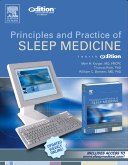
Textbooks "Taste Better" When Purchases Advance Peer Educational Web Portals

My crowded bookshelves always have room for more sleep textbooks. Back before the Internet offered the array of sites that provide textbooks today, those with an interest in sleep education were burdened with phoning publishing houses directly to acquire these resources. With few toll-free numbers available at that time, a hold time of 20 minutes was not uncommon, and frankly worried the call holder’s pocket, not to mention the lost time sitting on hold while they could be using to get some sleep before their nightshift started.

Although somewhat pricey on a sleep tech’s wage, we eagerly devour the contents (many times sans concern about the financial sacrifice), to enhance our own knowledge bases to be better healthcare providers. Certainly, it is the responsibility of each individual drawing a wage from a field to seek and to acquire continuing education and training. This is especially the case for healthcare providers that seek educational enhancements and tools, while at the same time complying with state profession regulatory rulings on training requirements. I've never seen a thing wrong with someone taking the responsibility for investing in their own future.

When a new student of a profession enters their field, the huge selection of “must reads” and "would really LOVE to reads" can be daunting, thus, in-field clearinghouse tools can greatly assist. I have purchased many of my own textbooks through rather well-known book distributors, and have been quite satisfied with the transactions, as a rule. However, I was always pleased to find programs where not-for-profit educational sites received donations as part of the proceeds from the larger distributors’ sales if book orders were placed through the smaller groups’ Web sites.

This concept is a win-win for situation for those of us that are consumers of both gently used or new textbooks, plus online (trusted) educational resources that come from the heart of our own sleep medicine and technology peer groups. I found such a program at Binarysleep. Andrew Korbel, a board-credentialed sleep technologist from Texas, launched this World Wide Web portal that is fueled by the core principals of community, education, and expression. The site is a recipient in a donation program through book-distributing giant, Amazon, and donations allow the site to continue its educational work. An ongoing attribute of Binarysleep.com is education and credentialing preparation for those involved in sleep technology. Quizzes, and a "live chat" are available to registered users, and you’ll often see seasoned peers helping many of their new-to-the-field counterparts experiencing technological pitfalls through pointing the “newbies” to professional industry standards or troubleshooting techniques. Andrew deserves the gratitude of many new sleep techs for providing a path illuminated by seasoned professionals sharing their trusted resources and knowledge.

I’m happy now to have found this donation program that benefits my new-to-the-field colleagues through Binary and Amazon, because this is how this consumer will make textbook purchases from now on. Hats off to Andrew and colleagues for giving something back to the sleep community.

Be well, Sleep Well,
T

Saturday, January 20, 2007

iVilllage & Healthology Provide Valuable Sleep Education Resouces


Healthology is one of the leading producers and distributors of physician-generated health and medical information on the Internet for consumers, patients and health professionals. With one of the largest and most distinguished libraries of original video and text-based health content on the Web, Healthology provides seamless solutions for online, health information needs.

iVillage & Healthology's Consumer Health Library contains numerous sleep educational Webcasts, sets of interactive lecture series, and text articles --all at no cost -- that feature interviews with some noted and board certified sleep medicine specialists. When visiting the homepage, readers should search "sleep" to view some topics by specialists including:

Arthur J. Spielman, PhD, Professor of Psychology, City College of New York; James C. O'Brien, MD, FCCP , ABSM, President, Talk About Sleep; Michael Thorpy, MD, D,ABSM, Director, Sleep Wake Disorders Center; Montefiore Medical CenterAssociate Professor of Neurology, Albert Einstein College of Medicine; Saul A. Rothenberg, Ph.D., D,ABSM, Licensed Psychologist, Connecticut and New York; Rafael Pelayo, MD, D,ABSM, Assistant Professor, Stanford University School of Medicine; Gary Zammit, PhD, D,ABSM, Sleep Disorders Institute; Brooke Judd, MD, ABSM, Dartmouth Medical School; and Daniel J. Buysse, MD, D,ABSM, University of Pittsburgh School of Medicine.

Be well, Sleep Well,
T

Sadness Over Passing of California Dreamin' Vocalist

Learning of the passing of so many artists that painted the canvas of Baby Boomer popular culture during my youth makes me gloomy to see them leave this world. With the death of Mamas and the Papas band member Denny Doherty yesterday, his music will still live on, but somehow it only puts another painful hit on those of us that remain behind. Doherty died at the age of 66 from kidney ailment complications. For you Gen X and Gen Y readers, The Mamas and the Papas, broke the mold for traditional unisex musical groups by presenting a blend of '60s upbeat pop and folk music while trailblazing the path for future bands made up of both women and men to be within acceptable limits. Their number one hit "California Dreamin" is one of my personal favorites. The band was inducted into the Rock and Roll Hall of Fame in 1998.

Denny, we’ll miss your angelic voice, but we can smile and hold our lighters up knowing you’re probably vocalizing some great harmonies with the late Papa John Phillips and Mama Cass Elliot now as you sleep the final sleep.

Sleep well, Denny.

T

Friday, January 19, 2007

NASA Sleep Educational Videos

This is a very interesting site called the Open Video Project, and if you go to this link and input the word “sleep” into the search function, you can view an array of NASA video files on the subject. Many are suitable for showing when you do your outreach visits to local schools when raising awareness about sleep in your communities. All you would need is a laptop, a projector, and a wireless connection. Ask the school to provide this for your presentations if you do not have access to this equipment.

About the Open Video Project:
Anticipating a future with widespread access to large digital libraries of video, a great deal of research is currently focused on many areas related to digital video. Research in these areas requires that each investigator acquire and digitize video for their studies since the multimedia information retrieval community does not yet have a standard collection of video to be used for research purposes.

The purpose of the Open Video Project is to collect and make available a repository of digitized video content for the digital video, multimedia retrieval, digital library, and other research communities. Researchers can use the video to study a wide range of problems, such as tests of algorithms for automatic segmentation, summarization, and creation of surrogates that describe video content; the development of face recognition algorithms; or creating and evaluating interfaces that display result sets from multimedia queries. Because researchers attempting to solve similar problems will have access to the same video content, the repository is also intended to be used as a test collection that will enable systems to be compared, similar to the way the TREC conferences are used for text retrieval.

Be well, Sleep Well,

Theresa

Happy 10th Anniversary Brendan & Debbie!

I just have to take a moment to congratulate my longtime friends, Brendan Duffy, RPSGT, and Debbie Carr, RPSGT, on their tenth anniversary together. No, they're not a couple, but certainly a couple of great sleep techs that have worked wonderfully together in Port Jefferson, NY for the past decade. Brendan (many of you endearingly call him “Labman2” on the Binarysleep Forum ) and Debbie are currently part of the great team at St. Charles Hospital Sleep Disorders Center, part of the Catholic Health System of Long Island.

Two better sleep techs you’ll never meet, and if I ever get a sleep study done, it is them I want monitoring my waves! I met Labman and Debbie years ago at a North East Sleep Society (NESS) meeting, and they’ve been dear to my heart ever since. Happy 10th, my friends!

Be well, Sleep Well,
Theresa