Wednesday, March 14, 2007

March 15th Let’s Talk Sleep Podcast Guest: Lena Kauffman, Sleep Review Editor

My guest on a new podcast that will air March 15th on Let’s Talk Sleep will be Lena Kauffman, editor for Sleep Review who recently conducted interviews with five members of the Sleep Community for the Sleep Review Home Testing Podcast Series. Kauffman’s guests included Dr. William C. Dement, Dr. Barbara Phillips, Dr. Michael J. Breus, Dr. Dominic A. Munafo, and Dr. David White. The Kauffman podcast will be available to listeners through Let’s Talk Sleep or iTunes by no-cost, direct download.

Kauffman has been the editor of Sleep Review, The Journal for Sleep Specialists since 2005. She is a graduate of the Medill School of Journalism at Northwestern University, and, as a medical science reporter and editor, has covered such diverse fields as home health care and diagnostic imaging.

Due to the issue being laden with controversy, no matter what is said about home sleep monitoring -- either for or against the issue – it appears that someone is distressed. The mainstream media had an overwhelming response to the recent study in the journal Annals of Internal Medicine that found home testing for sleep apnea to be as effective as in-laboratory polysomnography in terms of patient outcomes. The study title is
Diagnosis and Initial Management of Obstructive Sleep Apnea without Polysomnography: A Randomized Validation Study. There have been a number of posts about the topic on the sleep forums at binarysleep.com.

Having dialogue is a positive in that it is the responsibility of the Sleep Community to talk about these issues and concerns now and come up with solutions, guidelines and standards. Once the door is opened to home monitoring, those administering testing at home may not come from sleep backgrounds, thus potentially placing quality patient care at risk.

One of the most visible mainstream media reports on home testing came from FOX News Channel's resident medical expert Dr. Isadore Rosenfeld on Sunday Housecall who recently gave his opinion that there was no longer the need to go to sleep centers for testing he termed “a whole big deal” that may not always be necessary, and that people should look to home testing for a simpler approach. After the Annals of Internal Medicine study was released, there were numerous articles that appeared in the mainstream media, but were not comprehensive enough.

“The important thing about the mainstream media giving short headlines and sound bites on research studies is that patients and physicians read only this one little thing, and not be aware of the more complex issues,” Kauffman said. “By creating forums where experts can debate these issues, even if they are more devisive for a field, helps bring out more information in response to the studies.”

In the Sleep Review Podcast Series on Home Testing, guest opinions ranged from support for home testing to home testing being "a tempest in a teapot" and unnecessary. Kauffman gives a media expert opinion and overview of the messages relayed through the Sleep Review podcasts and covers educating insurers about home testing, existing reimbursement issues, the Veteran Administration’s current utilization of home sleep testing exclusively for its patients, and the fact that some private insurers are paying for home testing through contractual agreements with home testing companies.

I feel certain that many of you will be following the issue on home testing closely. I feel that as media members, Kauffman and Sleep Review represent an integral arm of the Sleep Community and that they chose to bring forth this very important issue using responsible journalism by informing readers and raising awareness. Kauffman invites listeners and readers to contact her with their ideas about home testing at lkauffman@ascendmedia.com

Be well, Sleep well,

Theresa


Tuesday, March 13, 2007

A facial, a pedicure, and a sleep study? Should we look closer at this headline: “Sleep Disorders Fuel Hot New Spa Trend in 2007” ? ?

I just saw this issue resurface on the newswire in the form of a new market report, and as it captures my attention again, I continue to wonder if this trend will be thought of by sleep medicine and technology professionals as a "watering-down of the science of sleep.” Recommending patients learn relaxation techniques is one thing, but if I was prescribing treatment for sleep disorders, I know I would want to know what a spa or resort program consists of before sending a patient there.

Due to the March 12 Millennium Research Group analysis report and press release that spurred the newswire headline, “Sleep Spas Will Help Expand the US Respiratory and Sleep Management Market to over $2.4 Billion by 2011, According to Millennium Research Group,” such news may also fuel the Sleep Community to examine this issue a bit closer.

Looking at the concept from a 10,000-foot view, it concerns me to think that someone with a parasomnia, or some other sleep disorders besides insomnia, would seek help from a spa rather than from a qualified sleep specialist. Certainly a lot of factors impact such issues.


What do you think? Do you believe that we as a community should examine this issue closer. With stakes as high as $2.4 Billion, and the mainstream media likely being all over this headline today, I believe spas will certainly have the time to pay attention...


Sleep well, Be Well,
Theresa

Thursday, March 8, 2007

Two New Podcasts Available: Ron Sherman, Sharon Kline from The Reading Hospital & Medical Center; Terrence Malloy, Atlanta School of Sleep Medicine


My guests on the Let’s Talk Sleep with Theresa Shumard Program this week are Sharon Kline, RRT, RPSGT and Ron Sherman, RRT (pictured above) from The Reading Hospital & Medical Center Sleep Center (TRHMC) located in Berks County in Southeastern Pennsylvania. Mr. Sherman is the Director of Respiratory Care and Ms. Kline is the Neurodiagnostic Coordinator for the sleep center. The sleep center, which has recently undergone a major expansion, is involved in a wonderful community educational outreach event that helps mark the National Sleep Foundation National Sleep Awareness season. The Sleep Awareness Day, in its 7th year in Berks County, and sponsored by TRHMC, will be held March 15, 2007 at The Inn at Reading.

The institution from which these guests hail has more than special meaning to me. You see, this is the very sleep lab where I began working in the field of sleep (dare I say) more than two decades ago. It was nice to visit with old friends and catch up with all that TRHMC has to offer the community I call home – especially its commitment to good sleep!

My other distinguished guest this week is Terrence Malloy, RPSGT, from the Atlanta School of Sleep Medicine & Technology in Atlanta, Georgia, gave a very interesting interview regarding the misrepresentation of sleep disorders and treatments as portrayed by the entertainment industry. We’ve all seen movies or television programs that really miss the mark where sleep is concerned. Maybe sleep professionals should offer their expertise to a few facilities in Hollywood!

You can hear both podcasts (at no charge) on iTunes or on Sleepmate Radio’s Let's Talk Sleep Web site.
Until next time, keep those moonfires burning :-)

Be well, Sleep well,
Theresa

Monday, March 5, 2007

Scientific Workshop and Annual Night of a Thousand Dreams Gala, Poll Results Kick Off National Sleep Foundation’s Biggest Week


National Sleep Awareness Week 2007
Scientific Workshop on Women & Sleep

The National Sleep Foundation and the Atlanta School of Sleep Medicine are working together to bring you a cutting-edge program on the unique issues concerning women and sleep. (Read more here)
Night of a Thousand Dreams Gala - Red Carpet Event of the Sleep Field

NSF's 7th Annual Night of a Thousand Dreams Gala to be held Tuesday, March 6, 2007 at the JW Marriott in Washington, DC. Attendees will have a chance to meet some of the world's renowned experts in the sleep field on a special night when NSF bestows a Lifetime Achievement Award to Sonia Ancoli-Israel, PhD (Read more here)
Watch this blog for Sleep in America Poll Results!
Be well, Sleep well,
Theresa

Monday, February 26, 2007

The Home Sleep Testing Controversy: Sleep Review Provides Vehicle to Raise Awareness Among Us


Controversy is certainly no stranger to all of society, and most assuredly not to medicine or medical technology. Like our colleagues from other fields of medicine and technology, the Sleep Community has seen its share of growing pains accompanied by controversy over the years as the field matured and as technology advanced. There seem to be many similarities between the controversies surrounding home sleep testing versus sleep laboratory testing and issues of yesteryear such as hospital versus freestanding laboratories, or full-night versus split-night studies. I remember paste versus glue for electrode placement during patient setups even being quite the controversy in some circles of our community at one time. After all, everyone is entitled to their own opinion.


Whether we are for or against home sleep testing, raising our levels of consciousness regarding the pros and cons is a wise move for any sleep professional. Inspired by a study published February 2007 in the journal Annals of Internal Medicine titled Diagnosis and Initial Management of Obstructive Sleep Apnea without Polysomnography: A Randomized Validation Study, Sleep Review brings forward diverse points of view related to the home testing controversy with its new podcast series made up of interviews with medical professionals and leaders on both sides of the issue.

I encourage you to tune into the Sleep Review "Home Testing Podcast Series" currently being conducted to educate yourself on both sides of the controversy while raising your own level of consciousness. While I was at a sleep conference late last year, after a pro/con debates were presented on home testing, the mediator asked attendees' opinions via a show of hands -- for or against home monitoring. I now wonder what people that frequent my blog think. Feel free to weigh in on the topic in the comment area below, or if you have difficulty with this feature, you may post at tshumard@comcast.net and your comments will be published on the blog.


Here are some points to ponder:


1. Do you feel that home testing is a bad or good move? Why?

2. Do you feel that reimbursements for home testing would limit the number of sleep studies done in your own lab or eliminate sleep technologist jobs or decrease the need for sleep specialist physicians?

3. Do you feel further validation is needed before reimbursements for home studies should be considered?

4. In your opinion, can studies done in the home have the same quality as laboratory studies?


Be well, Sleep well,
Theresa

New Podcast Available: Dr. Michael Breus

Michael J. Breus, PhD, DABSM, is founder and senior partner of The Sleep Center Management Institute (SCMI), the sleep medicine expert for WebMD, and a member of the Sleep Review editorial advisory board. Dr. Breus is board-certified in both clinical psychology and clinical sleep disorders. He is senior vice president of clinical operations for the Areté Sleep Health sleep laboratories and founded the patient education Web site. His new book is "Good Night: The Sleep Doctor's 4-Week Program to Better Sleep and Better Health."

You can hear the podcast featuring Dr. Breus at www.letstalksleep.com or on iTunes.


I hope you also tune in March 5th when Terry Malloy, RPSGT from the Atlanta School of Sleep Medicine & Technology talks to us about mishaps in portraying sleep disorders in film and television arts.


Be well, Sleep well,
Theresa
Wednesday, February 21, 2007

Patrick Sorenson, Colleen Bazzani Podcasts Available

On Let's Talk Sleep, two new podcasts are available. Patrick Sorenson talks about pediatric sleep studies, and Colleen Bazzani talks about her 200-plus member A.W.A.K.E. CPAP patient support group in Minnesota. You can hear the podcasts on iTunes or Sleepmate Radio.

Be well, Sleep well,
Theresa
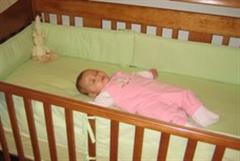
"We are first-time parents and are concerned about the amount of sleep our newborn child should get."

We have a new grandchild and his parents sought the advice of Jodi Mindell, PhD. on the National Sleep Foudation Web site. Dr. Mindell gives some very good information you can pass along to parents.

Dr. Mindell writes, "When babies first come home from the hospital, they usually sleep 14-18 hours a day. That sounds like a lot of time but it isn't, because the sleep of newborns isn't consolidated.."
You can read a read a review by Lynne Lamberg on Dr. Mindell's book, "Sleeping Through the Night" on the Sleephomepages site where Ms. Lamberg reviews numerous sleep-related books in her regular column Books for Sleepless Nights. The book has been revised since the review was written, but is timeless- a great addition to any sleep center library.
Pictured is my pride and joy, new grandson Owen Robert Lewis, born 2-17-07. I'm only slightly proud!
Be well, Sleep well,
Theresa
Friday, February 16, 2007

What do You Think of The New Look?

My friends at DeVilbiss have helped me create a new look for the blog. Let me know what you think of it by clicking on the 'comments' link below.

Wednesday, February 14, 2007

How healthy is America?

The 29th report from the Health, United States series, by the Centers for Disease Control and Prevention (CDC), is now available on the Bookshelf.

Also of interest on the bookself, click this link labeled Neuroscience and insert the word sleep into the search function to go directly to sleep-related chapters.

Neuroscience
Purves, Dale; Augustine, George J.; Fitzpatrick, David; Katz, Lawrence C.; LaMantia, Anthony-Samuel; McNamara, James O.; Williams, S. Mark.
Sunderland (MA): Sinauer Associates, Inc. ; c2001

\
~*~*~*~*~*~*~*~*~*~*~*~*~*~*~*~*~*~*~*~*~*~*~*~*~*~*~*~*~*~*~*~*~*~*~*~*~
(Full Text Available)

Driving ability in sleep apnoea patients before and after CPAP treatment: evaluation on a road safety platform.


Mazza S, Pepin JL, Naegele B, Rauch E, Deschaux C, Ficheux P, Levy P.HP2 laboratory (hypoxia, pathophysiology) INSERM ERI 0017, Joseph Fourier University, Grenoble, France.


~*~*~*~*~*~*~*~*~*~*~*~*~*~*~*~*~*~*~*~*~*~*~*~*~*~*~*~*~*~*~*~*~*~*~*~*~


PubMed is a service of the U.S. National Library of Medicine that includes over 16 million citations from MEDLINE and other life science journals for biomedical articles back to the 1950s. PubMed includes links to full text articles and other related resources.


Be well, Sleep well,

Theresa