Thursday, March 8, 2007

Two New Podcasts Available: Ron Sherman, Sharon Kline from The Reading Hospital & Medical Center; Terrence Malloy, Atlanta School of Sleep Medicine


My guests on the Let’s Talk Sleep with Theresa Shumard Program this week are Sharon Kline, RRT, RPSGT and Ron Sherman, RRT (pictured above) from The Reading Hospital & Medical Center Sleep Center (TRHMC) located in Berks County in Southeastern Pennsylvania. Mr. Sherman is the Director of Respiratory Care and Ms. Kline is the Neurodiagnostic Coordinator for the sleep center. The sleep center, which has recently undergone a major expansion, is involved in a wonderful community educational outreach event that helps mark the National Sleep Foundation National Sleep Awareness season. The Sleep Awareness Day, in its 7th year in Berks County, and sponsored by TRHMC, will be held March 15, 2007 at The Inn at Reading.

The institution from which these guests hail has more than special meaning to me. You see, this is the very sleep lab where I began working in the field of sleep (dare I say) more than two decades ago. It was nice to visit with old friends and catch up with all that TRHMC has to offer the community I call home – especially its commitment to good sleep!

My other distinguished guest this week is Terrence Malloy, RPSGT, from the Atlanta School of Sleep Medicine & Technology in Atlanta, Georgia, gave a very interesting interview regarding the misrepresentation of sleep disorders and treatments as portrayed by the entertainment industry. We’ve all seen movies or television programs that really miss the mark where sleep is concerned. Maybe sleep professionals should offer their expertise to a few facilities in Hollywood!

You can hear both podcasts (at no charge) on iTunes or on Sleepmate Radio’s Let's Talk Sleep Web site.
Until next time, keep those moonfires burning :-)

Be well, Sleep well,
Theresa

Monday, March 5, 2007

Scientific Workshop and Annual Night of a Thousand Dreams Gala, Poll Results Kick Off National Sleep Foundation’s Biggest Week


National Sleep Awareness Week 2007
Scientific Workshop on Women & Sleep

The National Sleep Foundation and the Atlanta School of Sleep Medicine are working together to bring you a cutting-edge program on the unique issues concerning women and sleep. (Read more here)
Night of a Thousand Dreams Gala - Red Carpet Event of the Sleep Field

NSF's 7th Annual Night of a Thousand Dreams Gala to be held Tuesday, March 6, 2007 at the JW Marriott in Washington, DC. Attendees will have a chance to meet some of the world's renowned experts in the sleep field on a special night when NSF bestows a Lifetime Achievement Award to Sonia Ancoli-Israel, PhD (Read more here)
Watch this blog for Sleep in America Poll Results!
Be well, Sleep well,
Theresa

Monday, February 26, 2007

The Home Sleep Testing Controversy: Sleep Review Provides Vehicle to Raise Awareness Among Us


Controversy is certainly no stranger to all of society, and most assuredly not to medicine or medical technology. Like our colleagues from other fields of medicine and technology, the Sleep Community has seen its share of growing pains accompanied by controversy over the years as the field matured and as technology advanced. There seem to be many similarities between the controversies surrounding home sleep testing versus sleep laboratory testing and issues of yesteryear such as hospital versus freestanding laboratories, or full-night versus split-night studies. I remember paste versus glue for electrode placement during patient setups even being quite the controversy in some circles of our community at one time. After all, everyone is entitled to their own opinion.


Whether we are for or against home sleep testing, raising our levels of consciousness regarding the pros and cons is a wise move for any sleep professional. Inspired by a study published February 2007 in the journal Annals of Internal Medicine titled Diagnosis and Initial Management of Obstructive Sleep Apnea without Polysomnography: A Randomized Validation Study, Sleep Review brings forward diverse points of view related to the home testing controversy with its new podcast series made up of interviews with medical professionals and leaders on both sides of the issue.

I encourage you to tune into the Sleep Review "Home Testing Podcast Series" currently being conducted to educate yourself on both sides of the controversy while raising your own level of consciousness. While I was at a sleep conference late last year, after a pro/con debates were presented on home testing, the mediator asked attendees' opinions via a show of hands -- for or against home monitoring. I now wonder what people that frequent my blog think. Feel free to weigh in on the topic in the comment area below, or if you have difficulty with this feature, you may post at tshumard@comcast.net and your comments will be published on the blog.


Here are some points to ponder:


1. Do you feel that home testing is a bad or good move? Why?

2. Do you feel that reimbursements for home testing would limit the number of sleep studies done in your own lab or eliminate sleep technologist jobs or decrease the need for sleep specialist physicians?

3. Do you feel further validation is needed before reimbursements for home studies should be considered?

4. In your opinion, can studies done in the home have the same quality as laboratory studies?


Be well, Sleep well,
Theresa

New Podcast Available: Dr. Michael Breus

Michael J. Breus, PhD, DABSM, is founder and senior partner of The Sleep Center Management Institute (SCMI), the sleep medicine expert for WebMD, and a member of the Sleep Review editorial advisory board. Dr. Breus is board-certified in both clinical psychology and clinical sleep disorders. He is senior vice president of clinical operations for the Areté Sleep Health sleep laboratories and founded the patient education Web site. His new book is "Good Night: The Sleep Doctor's 4-Week Program to Better Sleep and Better Health."

You can hear the podcast featuring Dr. Breus at www.letstalksleep.com or on iTunes.


I hope you also tune in March 5th when Terry Malloy, RPSGT from the Atlanta School of Sleep Medicine & Technology talks to us about mishaps in portraying sleep disorders in film and television arts.


Be well, Sleep well,
Theresa

Wednesday, February 21, 2007

Patrick Sorenson, Colleen Bazzani Podcasts Available

On Let's Talk Sleep, two new podcasts are available. Patrick Sorenson talks about pediatric sleep studies, and Colleen Bazzani talks about her 200-plus member A.W.A.K.E. CPAP patient support group in Minnesota. You can hear the podcasts on iTunes or Sleepmate Radio.

Be well, Sleep well,
Theresa
"We are first-time parents and are concerned about the amount of sleep our newborn child should get."

We have a new grandchild and his parents sought the advice of Jodi Mindell, PhD. on the National Sleep Foudation Web site. Dr. Mindell gives some very good information you can pass along to parents.

Dr. Mindell writes, "When babies first come home from the hospital, they usually sleep 14-18 hours a day. That sounds like a lot of time but it isn't, because the sleep of newborns isn't consolidated.."
You can read a read a review by Lynne Lamberg on Dr. Mindell's book, "Sleeping Through the Night" on the Sleephomepages site where Ms. Lamberg reviews numerous sleep-related books in her regular column Books for Sleepless Nights. The book has been revised since the review was written, but is timeless- a great addition to any sleep center library.
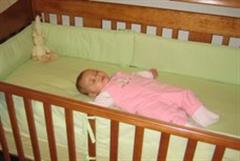
Pictured is my pride and joy, new grandson Owen Robert Lewis, born 2-17-07. I'm only slightly proud!
Be well, Sleep well,
Theresa
Friday, February 16, 2007

What do You Think of The New Look?

My friends at DeVilbiss have helped me create a new look for the blog. Let me know what you think of it by clicking on the 'comments' link below.

Wednesday, February 14, 2007

How healthy is America?

The 29th report from the Health, United States series, by the Centers for Disease Control and Prevention (CDC), is now available on the Bookshelf.

Also of interest on the bookself, click this link labeled Neuroscience and insert the word sleep into the search function to go directly to sleep-related chapters.

Neuroscience
Purves, Dale; Augustine, George J.; Fitzpatrick, David; Katz, Lawrence C.; LaMantia, Anthony-Samuel; McNamara, James O.; Williams, S. Mark.
Sunderland (MA): Sinauer Associates, Inc. ; c2001

\
~*~*~*~*~*~*~*~*~*~*~*~*~*~*~*~*~*~*~*~*~*~*~*~*~*~*~*~*~*~*~*~*~*~*~*~*~
(Full Text Available)

Driving ability in sleep apnoea patients before and after CPAP treatment: evaluation on a road safety platform.


Mazza S, Pepin JL, Naegele B, Rauch E, Deschaux C, Ficheux P, Levy P.HP2 laboratory (hypoxia, pathophysiology) INSERM ERI 0017, Joseph Fourier University, Grenoble, France.


~*~*~*~*~*~*~*~*~*~*~*~*~*~*~*~*~*~*~*~*~*~*~*~*~*~*~*~*~*~*~*~*~*~*~*~*~


PubMed is a service of the U.S. National Library of Medicine that includes over 16 million citations from MEDLINE and other life science journals for biomedical articles back to the 1950s. PubMed includes links to full text articles and other related resources.


Be well, Sleep well,

Theresa
Tuesday, February 13, 2007

New Study Holds Promise for Decreasing Barriers to Sleep Medicine Instruction, Underdiagnosis of Sleep Disorders


Integrated selective: An innovative teaching strategy for sleep medicine instruction for medical students.

Sleep Med. 2007 Mar; 8(2): 144-8. Bandla H, Franco R, Statza T, Feroah T, Rice TB, Poindexter K, Simpson D

OBJECTIVES: Sleep disorders are common among all age groups, but repeated studies have demonstrated that physicians underdiagnose sleep disorders. Lack of curriculum time and the limited number of faculty with expertise in sleep medicine have been cited as major barriers for sleep medicine instruction. This paper describes the development, implementation, and evaluation of an integrated selective in sleep medicine for fourth-year medical students. METHODS: A one-month required fourth-year integrated selective in sleep medicine was implemented at Medical College of Wisconsin (MCW). A curriculum was developed, incorporating core competencies of sleep medicine and using a combination of instructional strategies. Three sources of data were used to evaluate the selective: an elective-specific questionnaire, learner ratings, and performance on a pre- and post-knowledge test. RESULTS: Twenty medical students (13 male; 7 female) have completed the selective to date. Lack of exposure to sleep medicine during the first three years of medical school was the most common reason for taking the elective. Student evaluation of the rotation averaged 1.5 on a five-point scale (1=best), above the average for fourth-year rotations. The mean examination scores increased significantly from pre- (56%) to post- (86%) selective (p

(Source: HubMed)

Monday, February 12, 2007

New Radio Podcast Now Available, Guest ASAA's Dave Hargett


(Note: Next week on Let's Talk Sleep Radio, our guest will be

Patrick Sorenson, MA, RPSGT, discussing pediatric sleep studies.)

~*~*~*~*~*~*~*~*~*~*~*~*~*~*~*~*~*~*~*~*~*~*~*~*~*~*~*~*~*~*~*~

For this week's broadcast featuring Dave Hargett, go to www.letstalksleep.com or go to iTunes and subscribe to the "Let's Talk Sleep" podcasts.

Dave Hargett serves as the Chairman of the Board of the American Sleep Apnea Association (ASAA), entering his 4th year as Chair. The ASAA is the national non-profit organization that supports those with sleep apnea who need information about the disorder, advocates for them, and works to raise awareness about sleep apnea in the general public, in the workplace, and in the medical profession. The ASAA also fosters the A.W.A.K.E. Network of sleep apnea support groups around the country. See http://www.sleepapnea.org/ for more information about the ASAA.

Mr. Hargett is a sleep apnea patient turned sleep activist and sleep advocate. Diagnosed with severe obstructive sleep apnea at age 45, he found almost immediate relief and effective therapy with a CPAP set at 13 cm of pressure. Today he is retired from a 30-year career with a major national retailer and spends much of his time on several volunteer activities. He lives in a southwest suburb of Chicago.

When he was first diagnosed and attended his first A.W.A.K.E. group meeting, Mr. Hargett said he had no idea that he would become so involved with sleep apnea. He leads two A.W.A.K.E. groups in the Chicago suburbs that meet monthly, speaks directly with patients on the phone and answers emails for the ASAA.

He also speaks about sleep apnea to church groups, service organizations, corporate employees, other A.W.A.K.E. groups, and wherever else he can find someone to listen! At the 1996 "Great American Sleep Walk" in Washington, DC, he represented all sleep apnea patients when he spoke at the rally on Capitol Hill.