Sunday, January 21, 2007

Textbooks "Taste Better" When Purchases Advance Peer Educational Web Portals

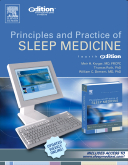
My crowded bookshelves always have room for more sleep textbooks. Back before the Internet offered the array of sites that provide textbooks today, those with an interest in sleep education were burdened with phoning publishing houses directly to acquire these resources. With few toll-free numbers available at that time, a hold time of 20 minutes was not uncommon, and frankly worried the call holder’s pocket, not to mention the lost time sitting on hold while they could be using to get some sleep before their nightshift started.

Although somewhat pricey on a sleep tech’s wage, we eagerly devour the contents (many times sans concern about the financial sacrifice), to enhance our own knowledge bases to be better healthcare providers. Certainly, it is the responsibility of each individual drawing a wage from a field to seek and to acquire continuing education and training. This is especially the case for healthcare providers that seek educational enhancements and tools, while at the same time complying with state profession regulatory rulings on training requirements. I've never seen a thing wrong with someone taking the responsibility for investing in their own future.

When a new student of a profession enters their field, the huge selection of “must reads” and "would really LOVE to reads" can be daunting, thus, in-field clearinghouse tools can greatly assist. I have purchased many of my own textbooks through rather well-known book distributors, and have been quite satisfied with the transactions, as a rule. However, I was always pleased to find programs where not-for-profit educational sites received donations as part of the proceeds from the larger distributors’ sales if book orders were placed through the smaller groups’ Web sites.

This concept is a win-win for situation for those of us that are consumers of both gently used or new textbooks, plus online (trusted) educational resources that come from the heart of our own sleep medicine and technology peer groups. I found such a program at Binarysleep. Andrew Korbel, a board-credentialed sleep technologist from Texas, launched this World Wide Web portal that is fueled by the core principals of community, education, and expression. The site is a recipient in a donation program through book-distributing giant, Amazon, and donations allow the site to continue its educational work. An ongoing attribute of Binarysleep.com is education and credentialing preparation for those involved in sleep technology. Quizzes, and a "live chat" are available to registered users, and you’ll often see seasoned peers helping many of their new-to-the-field counterparts experiencing technological pitfalls through pointing the “newbies” to professional industry standards or troubleshooting techniques. Andrew deserves the gratitude of many new sleep techs for providing a path illuminated by seasoned professionals sharing their trusted resources and knowledge.

I’m happy now to have found this donation program that benefits my new-to-the-field colleagues through Binary and Amazon, because this is how this consumer will make textbook purchases from now on. Hats off to Andrew and colleagues for giving something back to the sleep community.

Be well, Sleep Well,
T

Saturday, January 20, 2007

iVilllage & Healthology Provide Valuable Sleep Education Resouces


Healthology is one of the leading producers and distributors of physician-generated health and medical information on the Internet for consumers, patients and health professionals. With one of the largest and most distinguished libraries of original video and text-based health content on the Web, Healthology provides seamless solutions for online, health information needs.

iVillage & Healthology's Consumer Health Library contains numerous sleep educational Webcasts, sets of interactive lecture series, and text articles --all at no cost -- that feature interviews with some noted and board certified sleep medicine specialists. When visiting the homepage, readers should search "sleep" to view some topics by specialists including:

Arthur J. Spielman, PhD, Professor of Psychology, City College of New York; James C. O'Brien, MD, FCCP , ABSM, President, Talk About Sleep; Michael Thorpy, MD, D,ABSM, Director, Sleep Wake Disorders Center; Montefiore Medical CenterAssociate Professor of Neurology, Albert Einstein College of Medicine; Saul A. Rothenberg, Ph.D., D,ABSM, Licensed Psychologist, Connecticut and New York; Rafael Pelayo, MD, D,ABSM, Assistant Professor, Stanford University School of Medicine; Gary Zammit, PhD, D,ABSM, Sleep Disorders Institute; Brooke Judd, MD, ABSM, Dartmouth Medical School; and Daniel J. Buysse, MD, D,ABSM, University of Pittsburgh School of Medicine.

Be well, Sleep Well,
T

Sadness Over Passing of California Dreamin' Vocalist

Learning of the passing of so many artists that painted the canvas of Baby Boomer popular culture during my youth makes me gloomy to see them leave this world. With the death of Mamas and the Papas band member Denny Doherty yesterday, his music will still live on, but somehow it only puts another painful hit on those of us that remain behind. Doherty died at the age of 66 from kidney ailment complications. For you Gen X and Gen Y readers, The Mamas and the Papas, broke the mold for traditional unisex musical groups by presenting a blend of '60s upbeat pop and folk music while trailblazing the path for future bands made up of both women and men to be within acceptable limits. Their number one hit "California Dreamin" is one of my personal favorites. The band was inducted into the Rock and Roll Hall of Fame in 1998.

Denny, we’ll miss your angelic voice, but we can smile and hold our lighters up knowing you’re probably vocalizing some great harmonies with the late Papa John Phillips and Mama Cass Elliot now as you sleep the final sleep.

Sleep well, Denny.

T

Friday, January 19, 2007

NASA Sleep Educational Videos

This is a very interesting site called the Open Video Project, and if you go to this link and input the word “sleep” into the search function, you can view an array of NASA video files on the subject. Many are suitable for showing when you do your outreach visits to local schools when raising awareness about sleep in your communities. All you would need is a laptop, a projector, and a wireless connection. Ask the school to provide this for your presentations if you do not have access to this equipment.

About the Open Video Project:
Anticipating a future with widespread access to large digital libraries of video, a great deal of research is currently focused on many areas related to digital video. Research in these areas requires that each investigator acquire and digitize video for their studies since the multimedia information retrieval community does not yet have a standard collection of video to be used for research purposes.

The purpose of the Open Video Project is to collect and make available a repository of digitized video content for the digital video, multimedia retrieval, digital library, and other research communities. Researchers can use the video to study a wide range of problems, such as tests of algorithms for automatic segmentation, summarization, and creation of surrogates that describe video content; the development of face recognition algorithms; or creating and evaluating interfaces that display result sets from multimedia queries. Because researchers attempting to solve similar problems will have access to the same video content, the repository is also intended to be used as a test collection that will enable systems to be compared, similar to the way the TREC conferences are used for text retrieval.

Be well, Sleep Well,

Theresa

Happy 10th Anniversary Brendan & Debbie!

I just have to take a moment to congratulate my longtime friends, Brendan Duffy, RPSGT, and Debbie Carr, RPSGT, on their tenth anniversary together. No, they're not a couple, but certainly a couple of great sleep techs that have worked wonderfully together in Port Jefferson, NY for the past decade. Brendan (many of you endearingly call him “Labman2” on the Binarysleep Forum ) and Debbie are currently part of the great team at St. Charles Hospital Sleep Disorders Center, part of the Catholic Health System of Long Island.

Two better sleep techs you’ll never meet, and if I ever get a sleep study done, it is them I want monitoring my waves! I met Labman and Debbie years ago at a North East Sleep Society (NESS) meeting, and they’ve been dear to my heart ever since. Happy 10th, my friends!

Be well, Sleep Well,
Theresa

Wednesday, January 17, 2007

"Sleep" in The Song

I know so many of you know and collect the songs that contain the word sleep (or dream, night, moon, or stars) in the titles or verses.


I found a great list at Wikipedia, and these are just the ones under "T"

Talking in Your Sleep" by Crystal Gayle
"
Talking In Your Sleep" by The Romantics
"Thetawaves" by System of a Down
"Tired Of Sleeping" by Suzanne Vega
"To Go To Sleep" by
British Sea Power
"Toxic Holiday" by
Stars
"Together In Electric Dreams" by
Human League
"Trouble Sleeping" by
The Perishers
"Troubled Sleep" by
Cormac McCarthy

Enjoy!
T

Carlos Schenck, M.D., Author of "Paradox Lost: Midnight in the Battleground of Sleep and Dreams"

I spoke with Dr. Schenck today, and what a great doctor he is! I've always wanted to meet him. I can't help but think how fulfilling his life must be since he's lucky enough to see patients successfully treated for parasomnias, and living brand new lives (without the old fears). Bed partners must really be appreciative!!!

I discovered today that my daughter stole his book, "Paradox Lost: Midnight in the Battleground of Sleep and Dreams" from my office to read. Boy, is she lucky Mom already read it....and she had better return it as well!

It was so refreshing -- Dr. Schenck spoke a lot about sleep technologists to me. He credits the success of diagnosing parasomnia patients to diligent sleep technologists that assist in the cause nationwide and abroad. Keep up the great work, Guys & Gals!

He talked about the potential for parasomnia comorbidities, and how important it is to keep vigilent when we have sleep apnea patients in our labs for sleep studies. He's so right! I remember some cases where an obstructive sleep apnea patient had some very loud outbursts and thrashing, pulling leads off and shouting while I was performing their sleep studies.

I know you all will enjoy listening to Dr. Schenck on the show Jan. 29th. He's a very informative presenter.

You know, we're approaching that National Sleep Foundation (NSF) National Sleep Awareness Week (NSAW) time of year again (I call it Sleep Holy Week #1- APSS is Sleep Holy Week #2). It's almost like you can feel it in the air if you're in the Sleep Community. All of my sleep friends are like kindred spirits ready to celebrate! Pretty soon, we'll start seeing sleep stories on local TV stations, and read it in every newspaper we pick up. And lest we not forget National Sleep Technologist Appreciation Week is usually right after! Be sure and show your gratitude to the tech, the foot soldiers in the quest for good sleep.

Maybe you want to jot these down:

NSAW 2007 - Save the Dates!

* National Sleep Awareness Week: March 5-11
* NSF Women & Sleep Workshop: March 5-6, JW Marriott Hotel, Washington, DC
* 7th Annual Night of a Thousand Dreams Gala: March 6, JW Marriott Hotel, Washington, DC


Until next time,

Be well, Sleep Well,
T

Tuesday, January 16, 2007

The Sleep Cycle

If you have ever wondered about why people have to sleep or what causes dreams, then read on. In this article, you'll find out all about sleep and what it does for you.


Go to "How Stuff Works" to see some good sleep staging information.

Be well, Sleep Well,

T

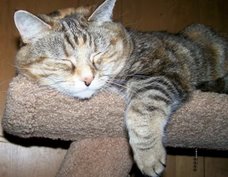
Did you ever wonder where the term "cat nap" originated?

According to http://en.wikipedia.org/wiki/Cat , cats conserve energy by sleeping more than most animals, especially as they grow older. Daily durations of sleep vary, usually 12–16 hours, with 13–14 being the average. Some cats can sleep as much as 20 hours in a 24-hour period. The term cat nap refers to the cat's ability to fall asleep (lightly) for a brief period and has entered the English lexicon – someone who nods off for a few minutes is said to be "taking a cat nap".

Thursday, January 4, 2007

Burglar takes time for a nap


Here's an interesting article I ran across. Hey, when you're sleepy, take a nap, I guess :-)

Burglar takes time for a nap

Attempts by a burglar were thwarted when a homeowner recently found the intruder fast asleep on the floor of the owner’s home. The burglar allegedly broke into a San Jose, California home, helped himself to dinner and liquor and then took a nap on the floor.
He apparently made himself at home for about two hours in the residence. During that time he helped himself to a can of beans and had a drink from the bar, and then curled up and took a nap on the living room floor.
The homeowner had moved out the week before, but stopped by the house about 2:30 p.m. and noticed the front door was open. Concerned that something might be afoot, he fetched a neighbor for help.